
Now Hiring Across the Network
Three Agencies.
One Mission. Your Role.
Explore each agency below, then scroll down to see current openings.



Critical Roles
These roles are our top priority. If this is your calling, apply today.
Licensed Social Worker or Licensed Professional Counselor
5+ years experience? Pay negotiable above posted range.We have an immediate need for a licensed clinician who has a genuine desire to help and improve the lives of others. As an LSW or LPC, you'll help clients cope with life's difficulties through care, counseling, and connection to community resources — listening closely to understand each client's needs while managing multiple cases.
Key Responsibilities
- Assess clients' needs and develop strategies to help.
- Complete Diagnostic Assessments — initial and updates as needed — using tools such as the DSM-5.
- Complete Treatment Plans and ensure they are followed and kept up to date.
- Maintain accurate and complete documentation of billable and non-billable notes using the Golden Thread.
- Sign off on notes as needed.
- Evaluate programs, services, and resources for quality.
- Provide support and resources for clients; research and refer clients to appropriate resources.
- Respond to crisis situations affecting children and vulnerable or mentally unstable adults.
- Provide counseling or psychotherapy sessions for children and adults.
- Create programs and services to benefit clients and the community.
- Advocate and raise awareness on behalf of clients and the needs of the community.
- Complete all required documentation as outlined in policy and procedures (assessments, treatment plans, progress notes).
Requirements
- Bachelor's degree in Social Work (Master's degree in Social Work or Counseling preferred).
- Maintains an active license through the Mental Health Board (LSW or LPC).
- Proficient computer skills, including Microsoft Office Suite (Word, PowerPoint, Excel).
- Ability to work nights and weekends.
- Ability to travel to meet with clients.
- Motivation to take on additional community involvement projects and solve problems.
- Comfort in a fast-paced environment with multiple cases.
- Self-directed and able to work without supervision.
- Completed background check within the 45 days prior to employment.
- 100/300 auto insurance if transporting persons served in a personal vehicle.
Licensed Independent Social Worker & Licensed Professional Clinical Counselor
We have an immediate need for independently licensed clinicians (LISW or LPCC) with a genuine desire to help and improve the lives of others. You'll help clients cope with life's difficulties through care and counseling, connect them to community resources, and sign off on clinical documentation as needed.
Key Responsibilities
- Assess clients' needs and develop strategies to help.
- Complete Diagnostic Assessments — initial and updates as needed — using tools such as the DSM-5.
- Complete Treatment Plans and ensure they are followed and kept up to date.
- Maintain accurate and complete documentation of billable and non-billable notes using the Golden Thread.
- Sign off on notes, treatment plans, and assessments as needed.
- Evaluate programs, services, and resources for quality.
- Provide support and resources for clients; research and refer clients to appropriate resources.
- Respond to crisis situations affecting children and vulnerable or mentally unstable adults.
- Provide counseling or psychotherapy sessions for children and adults.
- Create programs and services to benefit clients and the community.
- Advocate and raise awareness on behalf of clients and the needs of the community.
- Complete all required documentation as outlined in policy and procedures.
Requirements
- Master's degree or higher from an appropriately accredited social work or counseling program consistent with the requirements for the individual's Ohio professional license.
- Maintains active license through the Mental Health Board (LISW or LPCC).
- Proficient computer skills, including Microsoft Office Suite (Word, PowerPoint, Excel).
- Ability to work nights and weekends.
- Ability to travel to meet with clients.
- Motivation to take on additional community involvement projects and solve problems.
- Comfort in a fast-paced environment with multiple cases.
- Self-directed and able to work without supervision.
- Completed background check within the 45 days prior to employment.
- 100/300 auto insurance if transporting persons served in a personal vehicle.
Contract Assessor
The Contract Assessor provides clinical assessment, diagnostic, treatment-planning, documentation review, and clinical oversight services for clients receiving behavioral health services. This includes completing comprehensive diagnostic assessments and individualized treatment plans, and reviewing and signing designated progress notes and clinical documentation.
Key Responsibilities
- Complete comprehensive diagnostic assessments and reassessments for new and existing clients.
- Gather and evaluate relevant psychosocial, behavioral, mental health, medical, family, educational, and social history.
- Identify client strengths, needs, presenting concerns, risks, diagnoses, and treatment priorities within the scope of professional licensure.
- Develop individualized, person-centered treatment plans based on assessment findings and identified clinical needs.
- Establish measurable treatment goals, objectives, interventions, and expected outcomes consistent with the client's level of care.
- Review and update diagnostic assessments and treatment plans within required agency, regulatory, and payer timelines.
- Review designated progress notes and clinical documentation completed by program staff for accuracy, completeness, and clinical appropriateness.
- Sign off on progress notes and documentation that meet established clinical, agency, regulatory, and payer standards.
- Identify and return incomplete, inaccurate, inconsistent, or clinically insufficient documentation for correction.
- Ensure clinical documentation supports medical necessity, continuity of care, treatment-plan consistency, and applicable behavioral health compliance requirements.
- Complete all required documentation as outlined in policy and procedures.
Requirements
- Bachelor's degree in Social Work (Master's degree in Social Work or Counseling preferred).
- Maintains active license through the Mental Health Board.
- Apply appropriate diagnostic criteria within the scope of the contractor's professional license and credentials.
- Ability to sign off on progress notes and documentation at designated program locations.
- Verify that documentation appropriately reflects services provided and the client's treatment plan.
- Proficient computer skills, including Microsoft Office Suite (Word, PowerPoint, Excel).
- Comfort in a fast-paced environment with multiple cases.
- Self-directed and able to work without supervision.
- Completed background check within the 45 days prior to employment.
Our Current Openings
Office Assistant
The Office Assistant is the steady hand behind daily operations, providing administrative support to the Office Manager and keeping the agency's clinical environment organized, professional, and compliant. A vital "jack-of-all-trades" role where reliability and discretion keep everything moving.
Key Responsibilities
- Administrative Support. Assist the Office Manager with documentation, filing, and paperwork for healthcare providers and stakeholders.
- Communication Hub. Manage incoming calls with professionalism, directing them to the appropriate departments or staff members.
- Agency & Fleet Care. Maintain a clean, professional office environment. Responsible for refueling company vehicles, monitoring maintenance needs, and handling site-related requests.
- Mail & Logistics. Sort and distribute mail. Manage office inventory such as supplies, PPE, and forms to ensure essentials are always stocked.
- Medical Records Oversight. Serve as a key point of contact for medical records requests. Manage intake, verify authorization, and ensure secure, timely release of records.
- Confidentiality & Compliance. Maintain the highest standards of data integrity, with strict adherence to HIPAA and PHI protocols.
Skills & Qualifications
- Discretion Is Non-Negotiable. As a behavioral health agency, a deep understanding of HIPAA regulations and patient confidentiality is essential (or a strong willingness to learn).
- Reliability. You are the person who ensures the little things don't fall through the cracks.
- Adaptability. Comfortable switching between computer work, phone calls, and physical tasks such as checking a vehicle or organizing a supply closet.
- Professionalism. A calm, welcoming demeanor for clients and a supportive attitude toward busy clinical staff.
Benefits Eligibility
Licensed Program Coordinator Assistant
The Licensed Program Coordinator Assistant provides professional clinical and operational oversight across designated behavioral health sites. This role requires a licensed clinician who can combine clinical expertise with administrative precision — signing off on documentation and ensuring program implementation meets state licensing and board standards.
Key Responsibilities
- Clinical Sign-Off & Review. Review and sign off on clinical documentation, including individual service plans and progress notes. Use licensed clinical expertise to ensure documentation reflects medical necessity and adheres to the "Golden Thread."
- Program Fidelity. Monitor site-level implementation of behavioral health services to ensure alignment with evidence-based practices and agency policy.
- Compliance & HIPAA Guardrail. Serve as a subject matter expert on HIPAA and PHI at the site level. Ensure staff maintain the highest standards of patient confidentiality and data security.
- Staff Mentorship. Assist the Program Coordinator in guiding staff on professional maturity and clinical documentation standards.
- Quality Assurance Audits. Conduct regular internal audits of site records to ensure complete compliance with OhioMHAS (or relevant board) standards and payer requirements.
- Operational Liaison. Assist with site-specific logistics and maintenance requests to ensure a safe, therapeutic environment for clients.
Skills & Qualifications
- Licensure. Must be currently licensed (LSW, LPC, or equivalent) and in good standing with the state board.
- Clinical Insight. Ability to assess the quality of behavioral health services and documentation through a clinical lens.
- High-Stakes Documentation. Expert knowledge of clinical documentation requirements for behavioral health audits.
- Leadership Qualities. Ability to take initiative, solve site-level problems, and represent the agency's leadership with professional maturity.
- Ethics. Deep commitment to ethical practice and the protection of sensitive patient information.
Benefits Eligibility
QBHS Float (Qualified Behavioral Health Specialist)
The QBHS Float provides a range of mental and behavioral health services — facilitating Day Treatment groups, delivering TBSI services, and conducting CPST or CPSTG services. This role requires adaptability, as the Float supports various programs and client needs based on demand.
Key Responsibilities
- Facilitate group services, ensuring structured and therapeutic engagement.
- Provide TBSI (Therapeutic Behavioral Services & Interventions) to support individualized treatment plans.
- Deliver CPST (Community Psychiatric Supportive Treatment) or CPSTG services to individuals and groups, promoting emotional and behavioral well-being.
- Maintain thorough documentation of services provided in compliance with organizational and regulatory standards.
- Adapt to various settings and client populations as needed, providing flexible and effective support.
- Collaborate with interdisciplinary teams, including therapists, case managers, and other behavioral health professionals.
- Ensure adherence to all ethical, legal, and professional guidelines in the provision of services.
Requirements
- Minimum of a High School Diploma or GED; additional certification or training in behavioral health is preferred.
- Experience in mental and behavioral health services, particularly group facilitation, CPST, and TBSI services.
- Strong communication, interpersonal, and problem-solving skills.
- Strong reading and writing skills.
- Ability to work flexibly and adapt to changing client and program needs.
- Compliance with background checks and any necessary state or federal regulatory requirements.
Benefits Eligibility
Personal Assistant to the CEO
APA International is seeking a dedicated and organized Personal Assistant to support the CEO/Owner in managing daily operations and administrative tasks. The ideal candidate has strong communication skills, attention to detail, and the ability to handle multiple responsibilities in a fast-paced environment.
Key Responsibilities
- Manage the CEO/Owner's calendar — scheduling appointments, meetings, and travel arrangements.
- Handle correspondence, including emails and phone calls, ensuring timely responses and follow-ups.
- Prepare and organize documents and materials for meetings, presentations, and reports.
- Conduct research and compile information to assist with decision-making and project management.
- Maintain confidentiality regarding sensitive information and business matters.
- Assist with personal tasks and errands as needed to support the CEO/Owner's daily activities.
- Coordinate special projects and events, ensuring logistics are handled smoothly.
- Monitor and prioritize incoming requests and communications for effective time management.
Qualifications
- High school diploma or equivalent; additional education or relevant certification is a plus.
- Proven experience as a personal assistant or in a similar administrative role.
- Excellent written and verbal communication skills.
- Proficiency in Microsoft Office Suite (Word, Excel, PowerPoint) and other relevant software.
- Ability to work independently and as part of a team.
- Strong problem-solving abilities.
Benefits Eligibility
Licensed Social Worker
For individuals with a genuine desire to help and improve the lives of others. As a Licensed Social Worker, you'll help clients cope with life's difficulties through care, counseling, and connection to community resources — managing multiple cases while providing client-centered support.
Key Responsibilities
- Assess clients' needs and develop strategies to help.
- Complete Diagnostic Assessments — initial and updates as needed — using tools such as DSM-5.
- Complete Treatment Plans and ensure they are followed and kept up to date.
- Maintain accurate and complete documentation of billable and non-billable notes using the Golden Thread.
- Evaluate programs, services, and resources for quality.
- Provide support and resources for clients; research and refer to community resources.
- Respond to crisis situations affecting children and vulnerable adults.
- Provide counseling or psychotherapy sessions for children and adults.
- Create programs and services to benefit clients and the community.
- Advocate and raise awareness on behalf of clients and the needs of the community.
- Complete all required documentation as outlined in policy and procedures.
Requirements
- Bachelor's degree in Social Work (Master's degree in Social Work / MSW preferred).
- Active license through the Mental Health Board.
- Proficient computer skills, including Microsoft Office Suite (Word, PowerPoint, Excel).
- Ability to work nights and weekends as needed.
- Ability to travel to meet with clients.
- Self-directed and able to work without supervision.
- Completed background check within 45 days prior to employment.
- 100/300 auto insurance if transporting persons served in a personal vehicle.
Benefits Eligibility
Community Specialist (QMHS)
The QMHS Community Specialist enhances client management and satisfaction by providing community psychiatric supportive treatment and therapeutic behavior services. Accountable for the full client cycle — planning, implementing, monitoring, and evaluating actions to meet clients' mental health and human service needs.
Key Responsibilities
- Coordinate and provide care that is safe, timely, effective, efficient, equitable, and client-centered.
- Handle case assignments, draft service plans, and review case progress.
- Help clients achieve wellness and autonomy.
- Facilitate care aspects including case coordination and information sharing.
- Help clients make informed decisions by acting as their advocate regarding clinical status and treatment options.
- Develop effective working relationships and cooperate with community providers throughout case management.
- Coordinate with social services, health, and governmental agencies.
- Track client progress and ensure mental health and stability using DSM-5 and other tools.
- Record case information using the Golden Thread for accurate documentation of billable and non-billable notes and Treatment Plans.
- Transport clients in company and/or personal vehicles when needed.
- Conduct home visits when appropriate and meet clients at their level of comfort.
Requirements
- Associate or Bachelor's degree in Social Work or a related healthcare field.
- Proven working experience in case management, mental health care management, or a related role.
- Excellent knowledge of case management principles, healthcare management, and reimbursement.
- Previous experience with the psychological aspects of care.
- Ability to work nights and weekends as needed.
- Ability to travel to meet with clients.
- Self-directed and able to work without supervision.
- Completed background check prior to face-to-face contact.
- 100/300 auto insurance if transporting clients in a personal vehicle.
Benefits Eligibility
Program Administrative Assistant
The Program Administrative Assistant supports the Program Coordinator, program providers, contractors, and clients — assisting with daily office needs and managing the program's general administrative activities.
Key Responsibilities
- Answer and direct phone calls.
- Receive intake packets, verify insurance, and create client files.
- Organize and schedule program assessments.
- Plan meetings and take detailed minutes.
- Write and distribute emails, memos, letters, faxes, and forms.
- Assist in preparing daily, quarterly, and annual reports.
- Develop and maintain filing systems and employee contact lists.
- Adhere to confidentiality rights and expectations for clients and families.
- Assist clients with the intake process and provide general support to visitors.
- Act as the administrative point of contact for program clients and representatives.
- Liaise with Program Coordinator, Program Providers, and organizational leadership.
Requirements
- Proven experience as an office manager or office admin assistant.
- Knowledge of office management systems and procedures.
- Working knowledge of office equipment (printers, fax machines, scanners).
- Proficient computer skills, including Microsoft Office Suite (Word, PowerPoint, Excel).
- Ability to prioritize, multi-task, and demonstrate excellent organizational and time-management skills.
- Attention to detail and problem-solving skills.
- Effective communication skills and the ability to work independently or in a team.
- High School Diploma / GED equivalent; additional qualification as an Administrative Assistant or Secretary is a plus.
- Self-directed, motivated, and able to work with minimal supervision.
Benefits Eligibility
CANS Assessor
The CANS Assessor conducts comprehensive Ohio Children's Initiative Child and Adolescent Needs and Strengths (CANS) evaluations, ensuring complex behavioral health needs are identified and addressed. This contractor role translates clinical interactions into measurable, consensus-based outputs and coordinates with multi-system partners — following the "One Child, One CANS" philosophy to minimize trauma fatigue for families.
Key Responsibilities
- Ensure APA's mission and values are incorporated into every clinical assessment and professional action taken on behalf of the company.
- Conduct comprehensive, culturally competent, and trauma-informed CANS assessments for youth (ages 0–20) and their caregivers/families.
- Collaborate with the Youth Program Director to ensure assessment outcomes and documentation comply with CANS assessment standards.
- Gather clinical history and construct a holistic, consensus-based profile of the youth by actively interviewing multi-system partners (caseworkers, school personnel, court officials, developmental disability coordinators).
- Assess risks to the client and family, ensuring risk behaviors are documented, monitored, and minimized.
- Input and finalize CANS assessment data into the official State of Ohio CANS IT system within required clinical timeframes.
- Provide recommendation data derived from portal-generated algorithms to help determine appropriate levels of Care Coordination (Moderate vs. Intensive).
- Coordinate care hand-offs and collaborate seamlessly with the Agency.
- Maintain professional currency on local behavioral health trends and state CANS/Medicaid guidelines. Participate in contractually required case consultations and state-mandated CANS updates.
- Compile and submit completed assessment logs and portal confirmations to the Office Manager, and submit billing reports to the Assistant CEO for timely administrative reconciliation.
- Analyze conflicting multi-system perspectives and apply TCOM consensus-building principles to determine accurate CANS ratings that ensure appropriate care routing.
- Maintain positive professional relationships with key system stakeholders, community partners, and referring agencies.
Requirements
- Proven clinical experience in a behavioral health setting with strong assessment and interviewing skills.
- Successful completion of the official Ohio Children's Initiative TCOM and CANS Training.
- Active and maintained CANS certification with the Praed Foundation (re-certified annually with a score of 70% or higher).
- Secure, active credentials and proficiency using the official State of Ohio CANS IT System.
- Excellent communication, interpersonal, and consensus-building skills to engage youth, families, and multi-system stakeholders.
- Strong analytical and problem-solving skills to synthesize diverse perspectives into cohesive, standardized assessment scores.
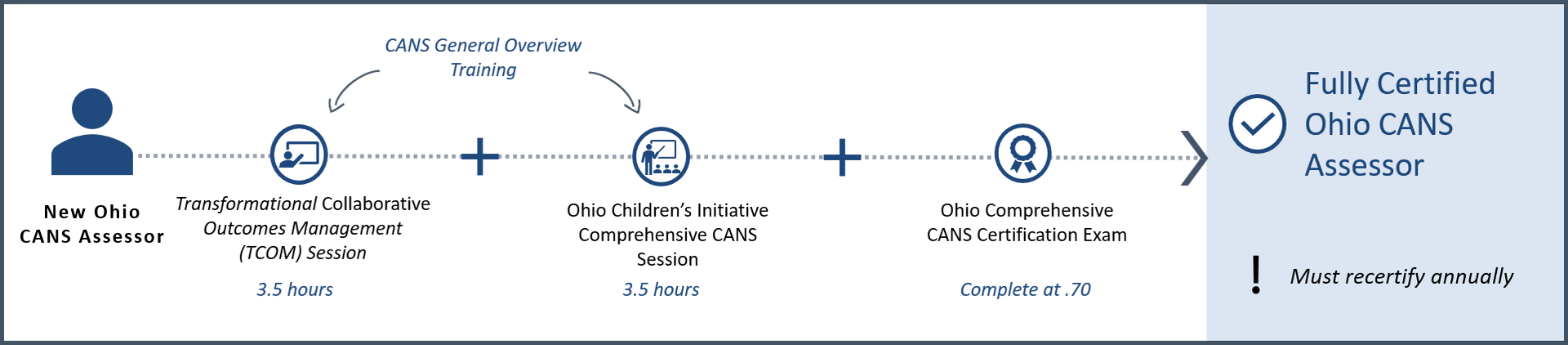
The OhioRISE program uses the Ohio Children’s Initiative Child and Adolescent Needs and Strengths (CANS) tool to establish eligibility.
The CANS was developed with leadership from Governor DeWine’s Children’s Initiatives and Ohio’s child-serving state agencies and is used by a wide variety of providers to inform care planning and decision-making for children and adolescents with behavioral health needs.
Certified Ohio Children’s Initiative CANS assessors are expected to use the CANS to gather all information about the child/youth and family story to describe their strengths and needs.
QBHS Respite Service Provider
The QBHS Respite Service Provider delivers planned or emergency short-term relief for primary caregivers — supporting the patient's behavioral stability while giving the caregiver a necessary break to breathe and rest. Services are performed under the supervision of a licensed clinical supervisor for APA International and its managed entities.
Key Responsibilities
- Provide high-quality, temporary care to the patient so primary caregivers can take a necessary break for their mental health, wellness, and relief.
- Deliver services in structured, reliable 4-hour service increments as scheduled.
- Support the patient in maintaining behavioral stability and routine consistency during the respite period.
- Ensure the patient's daily routine (meal times and scheduled activities) is followed as outlined in their Individualized Treatment Plan (ITP).
- Engage the patient in safe, age-appropriate community or home-based activities that align with the authorized caregiver relief goal.
- Monitor the patient's behavioral health status, maintain high-level observation, and use approved non-emergency de-escalation techniques if symptoms arise.
- Observe mood and behavior during the respite period and report any significant changes or concerns to the clinical team.
- Provide a brief verbal or written summary to the caregiver upon their return regarding the patient's behavior and any notable events.
- Complete accurate, timely Respite Progress Notes for each encounter in strict compliance with Respite standards.
- Promptly document and report any unusual incidents, accidents, or behavioral crises that occur during the service period.
- Participate in mandatory supervision and multidisciplinary team meetings as required by Ohio regulatory standards and agency policy.
- Maintain all required certifications, background checks, and training necessary to provide respite services under Ohio law.
- Maintain professional boundaries with the family, ensuring the service remains strictly focused on the patient's care and the caregiver's relief.
- Adhere to confidentiality rights, professional standards, and expectations for patients and families.
Requirements
- Training. Completion of required QBHS training covering the fundamentals of Qualified Behavioral Health Services in Ohio.
- Experience. Proven experience providing direct care, respite services, or behavioral health support to individuals with mental or behavioral health needs.
- Behavioral Support Knowledge. Working knowledge of Individualized Treatment Plans (ITPs) to understand the patient's baseline schedule, safety protocols, and behavioral triggers.
- Regulatory Compliance. Documented status confirming the contractor is not concurrently operating under external state-funded waiver systems that conflict with agency service delivery models.
- Safety Skills. Knowledge of trauma-informed care, de-escalation techniques, and non-emergency behavioral intervention strategies.
- Documentation. Ability to complete accurate progress notes in compliance with Respite standards.
- Consistency. Skilled in observing and identifying behavioral and mood changes, ensuring consistent daily routines and detailed incident reporting.
- Communication & Collaboration. Effective communication skills and commitment to participate in mandatory supervision and collaborate with multidisciplinary clinical teams, caregivers, and families.
- Education. High School Diploma / GED equivalent; additional qualification in behavioral health, social services, or a related field is a plus.
- Autonomy. Self-directed, motivated, and comfortable working independently with minimal supervision in varied environments, including patient homes and community settings.
- Flexibility. Ability to adapt to planned or emergency scheduling needs and commit to 4-hour minimum service increments.
- Professionalism. Ability to maintain strict professional boundaries with families while providing compassionate, patient-centered care.
- Background & Credentials. Minimum age of 18, valid First Aid/CPR certification (with hands-on training component), and successful completion of a criminal records check with no disqualifying offenses under OAC 5160-45-07.
Career Paths at APA International
These are the roles that make our network work.
If something here fits you, please express your interest below.
Insurance Claims Specialist
The Insurance Claims Specialist serves as the primary technical gatekeeper for the agency's clinical billing data, managing insurance claim audits end-to-end and ensuring clinical documentation supports every dollar billed.
Key Responsibilities
- Audit Management & Submission. Act as the lead for all incoming health insurance audits. Pull, verify, and submit requested claims and supporting documentation within strict payer deadlines to prevent recoupments.
- Technical Documentation Review. Proactively identify missing clinical elements such as signatures, dates, and assessments before audit submission. Ensure all documentation aligns with the "Golden Thread" and medical necessity requirements.
- Denial Prevention. Work closely with the Billing Department to analyze claim discrepancies. Identify patterns in documentation errors and report them to the Compliance Officer for staff training.
- Compliance & Data Security. Ensure all audit submissions strictly adhere to HIPAA, PHI, and state behavioral health regulations. Maintain a secure and organized digital filing system.
- Inter-Departmental Liaison. Maintain daily communication between Billing and Compliance to ensure a seamless flow of information regarding claim status and documentation standards.
Skills & Qualifications
- Audit Expertise. Proven experience navigating insurance audits (Optum, OhioMHAS, etc.) and understanding payer-specific requirements.
- Clinical Literacy. Ability to read a clinical note and verify whether it supports the specific code being billed.
- Experience. Proven background as a Medical Assistant or in Medical Records Management.
- Technical Skills. Expert familiarity with EHR (Electronic Health Record) systems and secure document upload portals.
- Regulatory Knowledge. Deep understanding of HIPAA and the legal requirements for releasing behavioral health records.
- Detail Obsession. A zero-error mindset when it comes to dates, signatures, and timestamps.
- High-Stakes Communication. Professional and assertive communication skills for coordinating between billing and clinical teams and for interacting with insurance payers.
Benefits Eligibility
Scribe
The Scribe provides real-time documentation support to licensed clinicians, case managers, and other behavioral health professionals. This role ensures client encounters, assessments, treatment plans, and progress notes are recorded accurately and promptly — allowing providers to focus more fully on client care.
Key Responsibilities
- Document client sessions and interventions in the EHR during or immediately following appointments.
- Maintain accurate and timely records of clinical encounters, including progress notes and care coordination.
- Review documentation for completeness, accuracy, and compliance with agency, state, and federal standards (including Medicaid/Medicare billing requirements).
- Assist clinicians with updating treatment plans, care coordination notes, and case management documentation as directed.
- Track follow-up tasks and ensure that referrals, labs, or other required actions are documented and communicated.
- Protect client confidentiality in accordance with HIPAA and agency policy.
Requirements
- High school diploma or equivalent required; Associate's or Bachelor's degree in Health Sciences, Psychology, Social Work, or related field preferred.
- Strong typing and computer skills; experience with electronic health records (EHR) preferred.
- Excellent listening, written communication, and attention to detail.
- Understanding of medical and behavioral health terminology strongly preferred.
- Knowledge of HIPAA regulations and confidentiality practices.
- Strong organizational and time-management skills.
- Ability to collaborate effectively with a multidisciplinary team.
- Professionalism and discretion in handling sensitive client information.
Benefits Eligibility
Assistant CEO
The Assistant CEO drives operational excellence and strategic growth — translating the organization's mission into measurable goals, overseeing daily operations, and ensuring compliance with CARF, OMHAS, and HIPAA standards. Leads finance and HR processes, cultivates stakeholder relationships, and pursues grants and business development opportunities.
Key Responsibilities
- Ensure APA's mission and values are woven into every operation and every representative's actions.
- Lead the development of short- and long-term strategic goals through policy documentation and CARF/OMHAS compliance.
- Work closely with Medical Records, Supervisors, and Clinical Supervisors to maintain client records in accordance with HIPAA, CARF, and OMHAS.
- Assess organizational risks and ensure they are monitored and minimized.
- Ensure clinical systems remain compliant with licensing boards.
- Manage payroll semi-monthly through BambooHR; ensure productivity goals are met across providers.
- Lead HR responsibilities including recruitment, hiring, onboarding, and personnel file maintenance.
- Research and pursue grant opportunities aligned with H.Y.P.E. of Lucas eligibility.
- Track and manage all aspects of grants and contracts.
- Facilitate monthly team meetings and provide leadership across departments.
- Maintain relationships with stakeholders, clients, and community partners.
- Identify growth opportunities, conduct market research, and recommend expansion strategies.
- Analyze business processes and implement changes to improve operational efficiency.
- Compile weekly reports for the CEO covering financials, productivity, expenditures, and team performance.
- Provide semiannual and annual performance reviews for team members past probation.
- Promote positive team culture through active listening and engagement.
- Enforce adherence to legal guidelines and in-house policies to protect the organization.
Requirements
- Proven leadership experience with strong managerial skills.
- Experience developing profitable strategies and implementing organizational vision.
- Strong understanding of corporate finance, performance principles, and project management.
- Familiarity with marketing, public relations, finance, and other core business functions.
- In-depth knowledge of corporate governance and general management best practices.
- Excellent communication and public speaking skills.
- Strong analytical abilities and problem-solving skills.
- Entrepreneurial mindset with outstanding organizational skills.
- MS/MA in Business Administration or related field.
Benefits Eligibility
Clinical & Organizational Manager
A versatile leader combining clinical, administrative, and operational oversight across licensed therapists and Qualified Mental Health Professionals. Develops training curriculum, ensures documentation compliance, and works closely with the CEO to achieve clinical and fiscal goals.
Key Responsibilities
- Contribute to APA's mission and program philosophies in a professional and ethical manner.
- Uphold federal and state laws, APA policies, HIPAA compliance, and safeguarding of PHI.
- Show awareness and respect for diverse cultures; identify culturally relevant issues in communications.
- Report suspected child abuse or neglect immediately to supervisor and Lucas County Children's Services.
- Participate in quality assurance activities including case record review and incident review.
- Establish appropriate relationships with clients, family systems, and the community.
- Provide guidance and supervision to clinical and other staff as needed.
- Participate in clinical team meetings to ensure service goals are met.
- Monitor completion of clinical documentation — assessments, treatment plans, progress notes, Daily Client Interaction Logs.
- Monitor the referral list and assign new cases based on caseload capacity.
- Ensure clients have timely access to care.
- Participate in monthly peer review and quality improvement activities.
- Develop onboarding curriculum and training for new staff.
- Develop and monitor internal/external client referral systems.
- Complete a minimum of seven diagnostic assessments per week when needed.
- Maintain professional licensure in good standing.
Requirements
- Licensed social worker in Ohio with at least 5 years of experience providing treatment services for children with mental health issues.
- Master's degree in a related field preferred.
- General knowledge of clinical administration within a behavioral health environment.
- Strong clinical skills — treatment issues for children, adolescents, adults, and family systems.
- Experience with foster/adoptive children and families; knowledge of the DJFS system.
- Effective oral and written communication skills.
- Competent with Microsoft Word, Excel, and standard office software.
- Active Ohio Social Work License, valid Ohio Driver's License, reliable transportation, valid auto insurance.
- Cleared criminal background check and pre-employment drug test.
Benefits Eligibility
Clinical Advisor
The Clinical Advisor enhances the quality and effectiveness of our behavioral health services by providing clinical expertise, supporting program development, and ensuring compliance with industry standards. Works collaboratively with staff, leadership, and community partners to improve client outcomes.
Key Responsibilities
- Provide clinical guidance and support to behavioral health staff, ensuring adherence to best practice and evidence-based approaches.
- Develop and facilitate training sessions and workshops for clinical staff.
- Liaise with the Clinical & Organizational Manager on service integration and client care initiatives.
- Collaborate on strategies to address identified areas for improvement.
- Uphold federal and state laws, agency policies, and HIPAA compliance.
- Show awareness and respect for diverse cultures; address culturally relevant issues appropriately.
- Report suspected child abuse or neglect to supervisor and Lucas County Children's Services.
- Establish appropriate relationships with clients, families, and the community.
- Attend agency meetings as required.
Requirements
- Master's degree in Social Work, Psychology, Counseling, or related field.
- Licensed social worker in Ohio with at least 5 years of experience providing treatment services for children with mental health issues.
- Strong clinical skills across children, adolescents, adults, and family systems.
- Experience with foster/adoptive children and families; knowledge of the DJFS system.
- Effective oral and written communication skills.
- Competent with Microsoft Word, Excel, and standard office software.
- Active Ohio Social Work License, valid driver's license, reliable transportation, valid auto insurance.
- Cleared criminal background check and pre-employment drug test.
Benefits Eligibility
Compliance & Systems Officer
Ensures the agency's mental and behavioral health programs operate in full adherence with federal, state, and local regulations, accreditation standards, and internal policies. Oversees internal monitoring systems, conducts audits and drills, and promotes a culture of ethical, compliant service delivery.
Key Responsibilities
- Regulatory & Accreditation Compliance. Maintain expert knowledge of OHMAS, CARF, OAC, Medicaid, HIPAA, and behavioral health regulatory standards. Ensure all programs remain survey-ready and lead preparation for accreditation surveys and inspections.
- Program Monitoring & Internal Auditing. Conduct routine audits of clinical, administrative, HR, billing, and operational documentation. Identify compliance deficiencies and implement corrective action plans.
- Risk Management & Quality Improvement. Identify high-risk areas and implement systems to reduce liability. Support Quality Improvement initiatives including performance metrics and data review.
- Training & Education. Provide onboarding and ongoing education on compliance, ethics, documentation standards, HIPAA, and regulatory updates.
- Safety & Emergency Preparedness. Oversee agency-wide emergency preparedness. Conduct and document mandatory drills (fire, evacuation, safety, cybersecurity, medical).
- Cross-Program Compliance Oversight. Ensure every program operates in accordance with compliance standards. Provide guidance to program managers and directors.
- Communication & Reporting. Serve as the primary compliance liaison with regulatory agencies and auditors. Prepare compliance reports for executives and the Board.
Requirements
- Bachelor's degree in Social Work, Health Administration, Behavioral Health, Compliance, or similar field.
- 3+ years experience in behavioral health compliance or regulatory oversight.
- Strong knowledge of OHMAS, CARF, OAC, Medicaid behavioral health standards, and HIPAA.
- Excellent auditing, documentation review, and investigative skills.
- Ability to train staff and present regulatory information clearly.
- Strong ethics, discretion, and confidentiality skills.
Preferred
- Master's degree or advanced certification (CHC, CHPC, CPMA).
- Previous experience leading CARF surveys or accreditation readiness teams.
- Experience with behavioral health EHR systems.
Benefits Eligibility
Human Resource Administrator
A high-level HR administrator managing the agency's personnel logistics and compliance operations. This is a leadership support role designed to operate with high autonomy — managing HR operations, conflict resolution, and regulatory compliance so executive leadership can focus on strategic growth.
Key Responsibilities
- Personnel Compliance & Logistics. Maintain and track all employee certifications, licenses, and credentials to ensure zero lapses in compliance. Oversee the Relias learning management system; coordinate with Department Leads to ensure staff training remains current. Manage the administrative lifecycle from onboarding to offboarding.
- Employee Relations & Conflict Management. Serve as the primary point of contact for internal employee disputes and grievances. Mediate conflicts with a focus on professional resolution. Identify high-risk personnel issues and escalate to executive leadership only when necessary.
- Operational Shielding. Tackle administrative and logistical HR hurdles that typically require executive intervention. Ensure HR agency functions remain compliant without day-to-day executive oversight.
Requirements
- Bachelor's degree in Human Resources Management, Business Administration, Healthcare Administration, or closely related field. Significant direct HR experience in a clinical setting may be considered in lieu of a degree.
- Deep understanding of the operational back-end of HR — labor laws, credentialing, compliance workflows.
- Exceptional de-escalation skills and the ability to handle difficult conversations with authority.
- Ability to maximize a 20-hour work week through superior organization and time management.
- Familiarity with training platforms (Relias) and organizational tracking systems.
Preferred Certifications
- SHRM-CP or SHRM-SCP
- PHR or SPHR
Internal Auditing Specialist
The Internal Auditing Specialist ensures all clinical and administrative documentation adheres to legal, regulatory, and accreditation standards. Reviews records, conducts audits, and implements compliance procedures to maintain accuracy, quality, and confidentiality.
Key Responsibilities
- Compliance & Quality Assurance. Ensure clinical and administrative documentation complies with federal, state, and agency regulations (HIPAA, Medicaid, CARF, Joint Commission). Conduct regular audits of client records, treatment plans, and progress notes.
- Documentation Support. Identify deficiencies and work with clinicians to correct issues. Maintain up-to-date knowledge of regulatory changes and communicate updates to staff. Create reference materials and templates.
- Record Management & Reporting. Oversee proper storage, security, and retrieval of medical records. Generate reports on documentation compliance trends and audit findings. Collaborate with leadership on corrective action plans.
- Policy Development. Assist in developing and enforcing documentation policies. Integrate best practices into agency workflows. Ensure timely completion of documentation for billing and reimbursement.
Requirements
- Associate's or Bachelor's degree in Health Administration, Social Work, Psychology, or related field.
- 2+ years experience in documentation compliance, medical records review, or related role within behavioral health.
- Excellent attention to detail and organizational skills.
- Strong verbal and written communication skills.
- Proficiency in EHR systems.
Preferred
- Certification in Healthcare Compliance (CHC), Certified Professional Medical Auditor (CPMA), or related.
- Experience working with CARF or Joint Commission.
- Strong knowledge of HIPAA, Medicaid/Medicare billing requirements, and behavioral health documentation standards.
Benefits Eligibility
Office Manager
The Office Manager coordinates daily office operations, supports administrative processes, and oversees assigned administrative staff. Manages office logistics, maintains efficient office systems, and ensures accurate timekeeping and documentation.
Key Responsibilities
- Office Administration. Coordinate daily office activities. Maintain inventory of office supplies. Provide administrative support including scheduling, document preparation, and internal communication. Address facility issues and coordinate repairs.
- Administrative Staff Oversight. Supervise assigned administrative staff by providing task direction and daily support. Assist with onboarding. Report staffing issues to the Assistant CEO.
- Systems & Workflows. Develop and update filing systems (physical or digital). Manage communication systems, implement workflow tools, standardize procedures for onboarding, expense reporting, and document approvals.
- HR & Timesheet Support. Collect, verify, and submit staff timesheets. Ensure hours align with Daily Client Interaction Logs. Maintain basic administrative records for staff.
- Compliance & Safety. Monitor adherence to safety regulations. Coordinate safety drills. Assist with compliance documentation.
- Executive Support. Support the Assistant CEO with calendar management and meeting logistics.
- Technology Coordination. Act as point of contact for IT issues. Manage inventory of office technology.
- Culture & Engagement. Help plan internal staff events. Coordinate welcome processes for new hires.
Requirements
- High school diploma or equivalent required. Degree or coursework in business administration is a plus.
- Minimum 2 years in an administrative or office coordination role.
- Experience supporting or supervising office or clerical staff preferred.
- Strong organizational skills with attention to detail.
- Clear and professional communication skills.
- Familiarity with Microsoft Office, Google Workspace, and project/task management tools (Trello, Asana, Monday.com).
- Ability to handle routine supervisory tasks without a leadership title.
- Comfortable handling confidential information with discretion.
Benefits Eligibility
Program Coordinator
The Program Coordinator enhances the quality of the program, maximizes satisfaction, and promotes cost-effective interventions. Accountable for the care of individuals focused on individualized treatment plan goals — planning day-to-day activities and evaluating actions required to meet clients' mental health needs.
Position begins with an initial engagement period, with potential for long-term placement based on performance and organizational fit.
Key Responsibilities
- Coordinate and provide care that is safe, timely, effective, equitable, and client-centered.
- Promote quality and cost-effective interventions and outcomes.
- Coordinate and oversee program planning.
- Take the lead in decision-making.
- Analyze and evaluate program effectiveness; develop improvement methods.
- Complete all required paperwork and forms.
- Revise program goals and objectives to meet changing client needs.
- Complete pre- and post-tests for programming.
- Complete screening forms for program admission.
- Adhere to professional standards, protocols, rules, and regulations.
- Create crisis management plans to be executed in the event of a problem.
- Approve program expenditures within budget limitations.
- Schedule facilitators and co-facilitators to deliver direct services.
Requirements
- Associate's or Bachelor's degree in a related healthcare field.
- Proven working experience in mental health care, group settings, or related work.
- Previous experience with holistic approaches working with providers and families.
- Excellent organizational and time management skills.
- Problem-solving skills and ability to multi-task.
- Compassionate with strong teamwork skills.
- Effective verbal and written communication.
- Strong leadership and interpersonal skills.
- Ability to motivate and encourage others.
Benefits Eligibility
Project Manager
Responsible for the strategic oversight and successful execution of projects across all company departments. Serves as a critical bridge between departmental needs and executive goals — ensuring teams have the necessary resources, clear timelines, and budgetary support to succeed.
Key Responsibilities
- Cross-Departmental Oversight. Monitor the lifecycle of all active projects across the organization to ensure alignment with APA's global standards and strategic objectives.
- Monday.com Architecture & Governance. Serve as the Super User and platform architect. Design and maintain master boards, automate workflows, and build executive dashboards providing real-time visibility into project health.
- Resource Advocacy. Act as the primary advocate for department heads. Identify bottlenecks, negotiate for necessary tools or personnel, and ensure teams are never stalled due to lack of resources.
- Timeline & Milestone Management. Develop and enforce realistic project schedules. Proactively address potential delays.
- Budgetary Stewardship. Monitor project spending. Identify cost-saving opportunities without compromising quality.
- Process Optimization. Standardize project management methodologies across the company.
- Stakeholder Communication. Provide regular briefings to the Assistant CEO and Board regarding project health, risks, and resource requirements.
Requirements
- 5+ years of project management experience, preferably in a multi-departmental corporate environment.
- Proficiency in project management software (Asana, Monday.com, Smartsheet) and financial tracking tools.
- Firm but fair approach to accountability — comfortable challenging department heads while supporting their needs.
- Proven ability to resolve conflicts between departments regarding shared resources or competing priorities.
Benefits Eligibility
Youth Program Director
Oversees all youth programming — ensuring quality services and compliance with agency standards. Provides leadership to day treatment programs, oversees youth group facilitators, and delivers individualized part-time services to persons served, including one-on-one therapy and case management.
Key Responsibilities
- Provide part-time individualized services to persons served (1:1 therapy, counseling, case management).
- Serve as the direct report for all day treatment programs.
- Oversee youth group facilitators to ensure effective delivery of group services.
- Approve and oversee program development, curriculum, and activities for youth services.
- Ensure youth programming aligns with agency mission, goals, and accreditation standards.
- Act as a substitute for youth group facilitators as needed to maintain service continuity.
- Attend team meetings and contribute to program planning and coordination.
- Attend professional development trainings as required.
- Be resourceful in engaging and connecting youth participants to community resources.
- Monitor and evaluate program effectiveness; implement improvements as needed.
- Collaborate with guardians, schools, and community partners to support positive youth outcomes.
- Oversee documentation, reports, and data collection for quality assurance and regulatory compliance.
- Uphold confidentiality, ethical standards, and a safe environment for all participants.
Requirements
- Master's degree in Social Work (MSW) or related field required; LSW/LISW preferred.
- Minimum 3 years experience in youth services, behavioral health, or related programming.
- Strong leadership, organizational, and communication skills.
- Ability to work independently and collaboratively across teams.
- Experience in program development and youth-focused service delivery preferred.